
Looking Back at Gartner IT Symposium Through a Researcher's Eyes
After Gartner IT Symposium in Orlando, Andrew Edwards shares how market research can measure event visibility, explore AI adoption and compare leaders with employees.
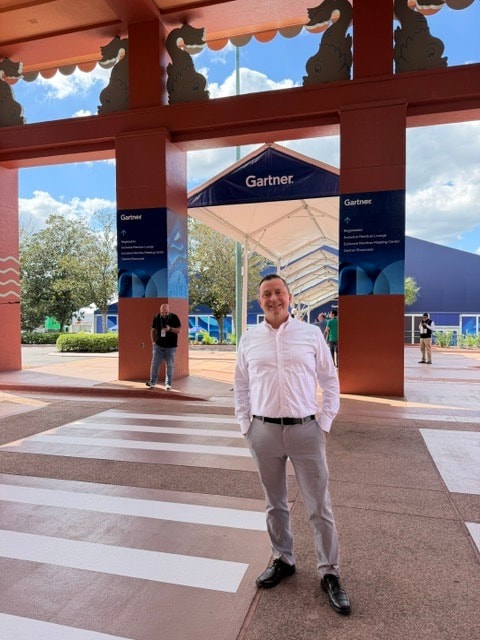
Gartner IT Symposium/Xpo wrapped up today in Orlando, and I'm leaving with plenty to think about from a market research perspective.
The conference covered AI, cybersecurity, business transformation and the challenges facing technology leaders. These are also subjects we help clients explore at CITE Research. www.gartner.com
When a brand is everywhere
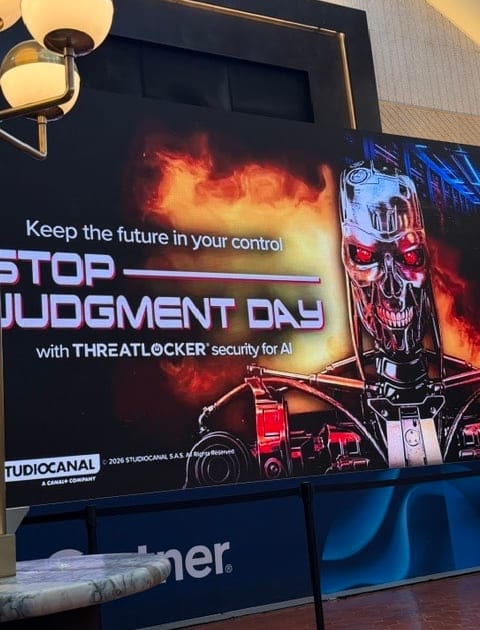
One brand that certainly caught my attention was ThreatLocker. Their advertising seemed to be everywhere at the hotel: outside the building, inside the lobby, along the escalators and beyond.
Threatlocker's focus on stopping Judgement Day (Terminator reference) was outstanding! I give them major credit for going all in on getting people a little bit more than nervous about cybersecurity hacking and the worst possible outcomes.
It made me think about how measuring awareness before and after an event can help companies understand what changed. Did this focus bring ThreatLocker more attention? Did younger attendees see the connection to the movies? Comparing attendees who recall seeing the advertising with those who don't can add context, although other differences between those groups could also influence the results.
Getting specific about AI adoption
Asking whether a company uses AI might produce an interesting headline, but it leaves a lot unanswered.
One company might be experimenting with a few tools. Another might have AI built into daily operations. Both could answer yes.
A useful study would explore the difference. Which teams are using it? For what tasks? What results can they demonstrate?
Through B2B market research, we can explore those details and compare experiences across industries, company sizes and job roles.
Are leaders and employees seeing the same thing?
When a company introduces new technology, leadership and employees may judge its success differently.
Executives might focus on productivity, costs and business results. Employees might focus on whether the tools are useful, whether they've received enough training and how their responsibilities are changing.
Comparing two groups can be extremely valuable research. An overall result might suggest things are going well, while separate results reveal very different experiences.
For example, leaders might believe their organisation has provided enough AI training, while employees say they still need help using the tools in their daily work. That gap gives the company something specific to investigate and address.
Agreement is useful, too. If both groups identify the same obstacle, it can help establish a shared priority.
The key is asking comparable questions and including enough people from each group to make the comparison meaningful.
Measuring what changes over time
I'm also interested in how those experiences evolve.
An initial survey can establish a starting point for confidence, usage, training and perceived value. Repeating key questions later can show what has changed.
Are more employees using the tools? Are they finding them more useful? Have their concerns shifted?
A consistent research approach helps companies follow those changes and make better informed decisions.
Giving the market something useful to discuss
These findings can also become valuable thought leadership research.
A study comparing executive expectations with employee experiences can give a company something substantive to share through reports, presentations, media outreach and customer conversations.
That's what I'm bringing home from Gartner: ideas for research that helps companies understand what's happening inside their organisations and across their markets.
If your team is considering a study, let's discuss it. We always start with a conversation.
Andrew Edwards is the Founder and CEO of CITE Research. Drawing on experience at Nielsen and Edelman, he helps companies use independent market research to support PR, marketing and business decisions.
Written by
Andrew Edwards
Andrew Edwards is the CEO of CITE Research, a tactical global market research firm specializing in B2B, PR, healthcare, and hard-to-reach audience research. He has led hundreds of quantitative and qualitative studies for technology, cybersecurity, financial services, and healthcare clients across North America, Europe, and Asia-Pacific. Andrew writes on research methodology, data quality, and the strategic use of original research in B2B marketing and communications.