How Long Does a PR Survey Take
Work backward from your campaign date to plan the brief, questionnaire approvals, recruitment, analysis and content production.
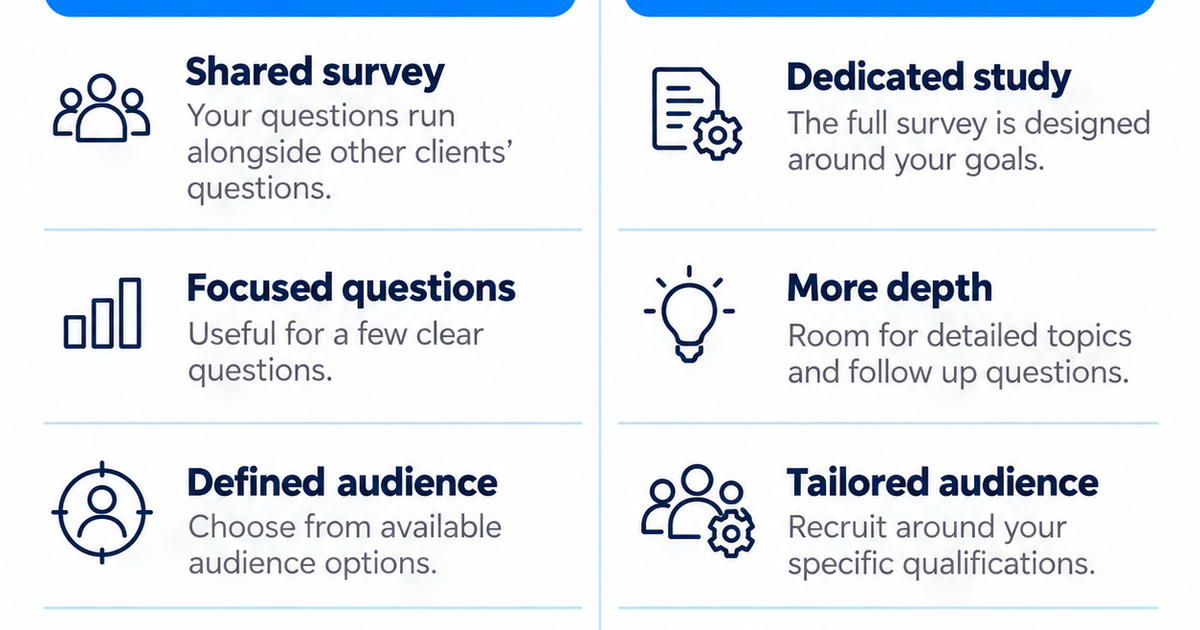
A focused consumer omnibus can deliver findings in a few business days after approval and placement in an appropriate wave. A custom PR survey usually needs more time because the audience, questionnaire and analysis are built around the project.
CITE's current PR research guidance describes approximately three to five business days for omnibus and three to four weeks for custom research. Confirm the schedule for your audience and scope before committing to a publication date.
The most useful planning question is when your team needs finished, reviewed materials. The day interviews end and the day a campaign is ready to launch are often different.
Begin with the date the findings need to be used
Tell your research partner whether the deadline is a conference presentation, report launch or journalist briefing. Explain what needs to exist by that date.
A speaker may need approved slides before the conference begins. A PR team may need time to brief executives and prepare responses to methodology questions. A design team may need the findings before it can complete a report.
Work backward from those requirements. The research timeline should connect to the communications timeline rather than end when a data file arrives.
Our PR survey research service explains the stages and deliverables to discuss when planning the work.
Allow time to agree on the objective and audience
A clear brief makes later decisions easier. Identify the question the study needs to answer, the people qualified to answer it and the comparisons that matter.
"We need technology professionals" leaves a lot to resolve. A more specific definition might include responsibility for purchasing, company size and familiarity with a particular product category.
Specialised audiences may need a feasibility check. International work can involve local recruitment and language decisions. Resolve those questions before treating a provisional schedule as final.
CITE's audience recruitment information can help you prepare a more useful brief.
Give questionnaire review a clear owner
Question development includes writing, review, programming and testing. Your team's approval process affects how smoothly that work moves.
Decide who needs to comment and who has final approval. It helps to collect feedback in one place and settle conflicting requests before returning the document to the research team.
Late changes can have consequences beyond the wording. Adding a new audience comparison may change recruitment. Adding a question can change routing or require additional testing.
Ask your partner which changes affect timing. A clear approval point protects both the deadline and the quality of the questionnaire.
Understand what fieldwork involves
Fieldwork includes recruiting eligible participants, collecting responses and monitoring the study. Reaching a broad consumer audience and reaching a narrow group of executives can involve different schedules.
Quality review also matters. Responses may need further evaluation before they are accepted into the final dataset. A target interview count does not mean every submitted response should automatically be included.
For a focused consumer topic, our omnibus surveys may offer an appropriate route. Wave availability, question approval and the final scope still need to be confirmed.
Leave room for analysis and content review
Once data collection is complete, the team needs to check tables, examine findings and confirm what the results support.
If the project includes industry comparisons, a written report or several presentations, those deliverables need time too. Ask which materials arrive first and when the final package is due.
Your communications review should include checking headlines against the actual questions and sample bases. A finding about individual employees should not become a headline about all companies.
CITE's research methodology describes the work connecting design, quality review and interpretation.
Make a compressed deadline a scope conversation
If the date is close, ask which options are realistic. A narrower objective, fewer markets or a focused question set may make a difference. Sometimes the right audience or required analysis simply needs more time.
Be open about the deadline from the start, including any internal reviews you cannot shorten. That gives your partner a chance to recommend a plan that can actually work.
You can share your project with CITE Research before the questionnaire is written. Bring the launch date and intended use, and we can work backward together.
Written by
Andrew Edwards
Andrew Edwards is the CEO of CITE Research, a tactical global market research firm specializing in B2B, PR, healthcare, and hard-to-reach audience research. He has led hundreds of quantitative and qualitative studies for technology, cybersecurity, financial services, and healthcare clients across North America, Europe, and Asia-Pacific. Andrew writes on research methodology, data quality, and the strategic use of original research in B2B marketing and communications.